


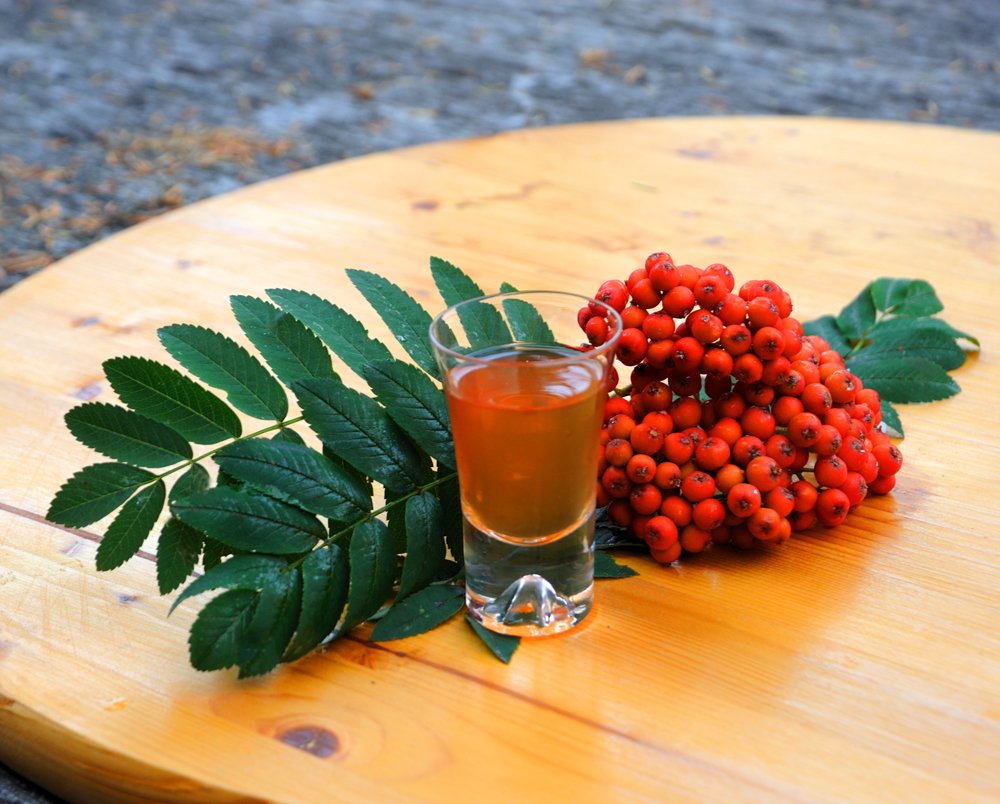
Red rowan. Numerous species of rowan grow throughout Europe, North America, and Asia. The most representative species is the European rowan, Sorbus aucuparia. Rowan is frost-hardy and undemanding. In spring, it rewards us with beautiful white flowers, and in autumn — with an abundance of bright red berries.
The berries, however, are bitter and astringent, so you won’t eat many of them. And you probably shouldn’t. Raw rowan contains parasorbic acid glycoside, which can cause irritation of the gastrointestinal tract, as well as cyanogenic glycosides, which, when plant cells are damaged — for example, when you chew the berry — can break down into poisonous hydrocyanic acid. The amounts of these compounds in rowan are small. Nothing is likely to happen from eating a few berries, but you shouldn’t overdo it. This is just in case the bitter, astringent taste of rowan doesn’t stop you from eating it by the handful. On top of that, rowan contains relatively little sugar. Even the sweetest rowan berries contain only about 12% sugar, and usually less.
However, the seemingly less-than-ideal flavor of the berry hasn’t prevented rowan from becoming — and remaining for hundreds of years — a popular ingredient in Eastern and Northern Europe for syrups, jams, and other culinary preserves. Especially since heat treatment destroys the harmful and bitter glycosides.
And, of course, red rowan has also been used — and continues to be used — to make all kinds of infusions, liqueurs, and other wonderful alcoholic drinks. Both homemade and commercial.
For example, in Scotland, rowan wine has traditionally been made and then distilled into an aromatic eau-de-vie.
In Wales, since the 18th century, people have made diodgriafel — rowan wine or ale — and have also used rowan to flavor mead.
In the Alpine regions of Austria and Bavaria, they traditionally produce Vogelbeerschnaps — a clear, bittersweet eau-de-vie with notes of marzipan and almond, made by distilling rowan wine.
In Poland, they have long made Jarzębiak, a vodka infused with rowan berries. In the Czech Republic, there is a similar drink called Jeřabinka.
In 1889, at the World’s Fair in Paris, Pyotr Smirnov, the “vodka king” of Russia and the forefather of the Smirnoff brand created by his son, caused a sensation with his rowan infusion, Nezhinskaya Rowan ( “Нежинская Рябина”). The infusion received the Grand Gold Medal and attracted considerable interest from competitors, who could not reproduce the “Nezhinskaya Rowan.” All their attempts resulted in bitterness — perfectly understandable for a rowan-based drink. But Nezhinskaya was sweet. The secret was hidden in the rowan itself — and in Smirnov’s little trick. Smirnov used rowan berries collected near the village of Nevezhino, not far from Suzdal. At some point, the peasants of Nevezhino had discovered a variety of European rowan that differed from the ordinary kind by having almost no bitterness and a higher sugar content. They began cultivating it and actively selling the berries. Smirnov knew about this rowan and used it specifically for his infusion. But he changed the name to “Nezhinskaya.” First, it sounded better. And second, it confused his competitors, sending them off to the distant town of Nizhyn, near Chernihiv, which was not particularly famous for any special variety of rowan.
These are just a few examples.
By the middle of the 20th century, the popularity of various alcoholic drinks made from rowan had declined significantly. But now, judging by the looks of things, we’re seeing a new revival of all kinds of rowan-based spirits. For example, in Scotland, rowan gins are currently quite popular.
And, of course, there are countless recipes for homemade rowan liqueurs and infusions. I chose one of the classic versions, the one that best suits my taste.
Let’s make rowan berry liqueur.
Ingredients:
Red rowan berries — 500 g
Vodka — 500 ml
Sugar — 250 g
Water — 0–250 ml
Process:
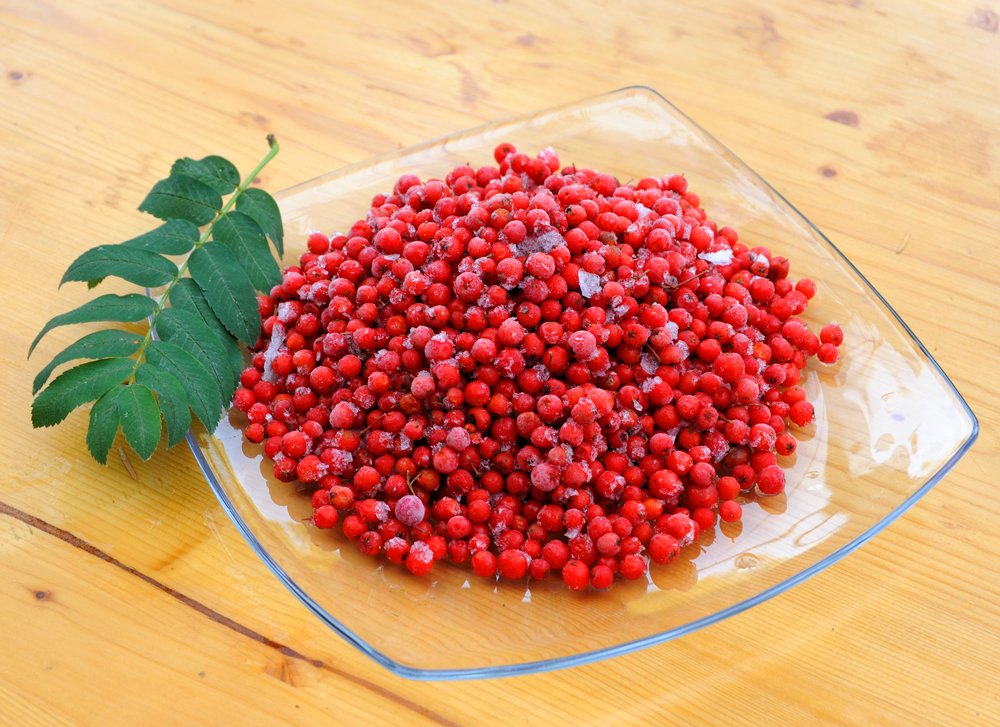
Remove the berries from the clusters and discard any spoiled ones — blackened, rotten, or mouldy berries. Rinse them with water and pat dry. If you picked the berries from the trees after the first frost, that’s ideal. But for many of us, that’s not really an option. Where I live, the first frosts come so late — if they come at all — that by then, the thrushes have already eaten every last rowan berry. So, if we can’t rely on Mother Nature to provide the frost, we pick ripe berries, prepare them, and put them in the freezer for 2–3 days.
Rowan berries contain little sugar, and whatever sweetness they do have is masked by bitterness. Freezing reduces the bitterness and astringency of rowan, partially breaking down the parasorbic acid glycoside responsible for the characteristic rowan bitterness, as well as the tannins responsible for the astringency. In addition, some of the starch in the berries is hydrolyzed into sugars, which makes the rowan a little sweeter.
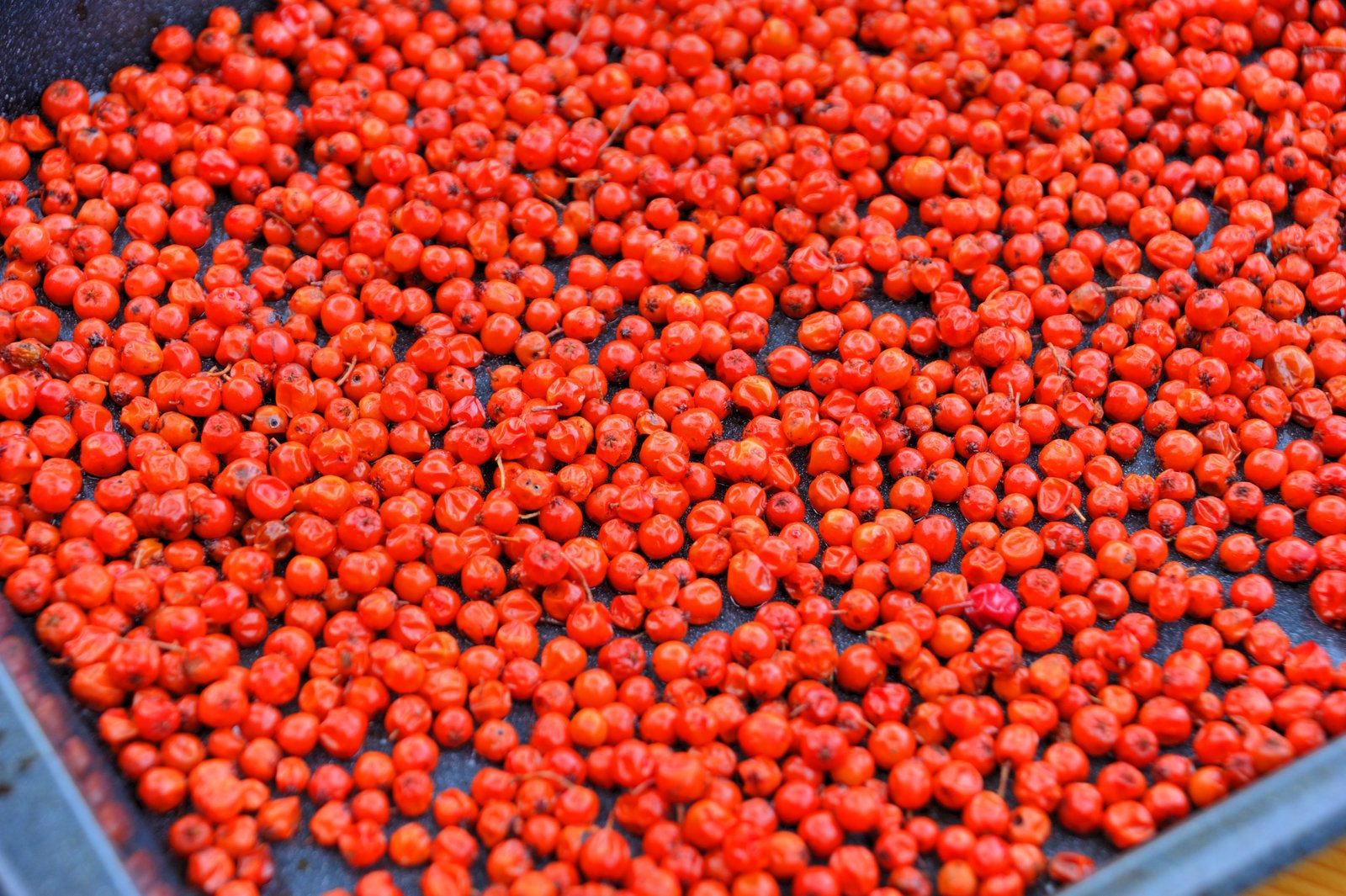
Spread the prepared berries in a single layer on a baking sheet and put them into an oven preheated to 60–65°C until the berries just start releasing their juice — about 12–15 minutes. The heat treatment will finish converting the bitter parasorbic acid into non-bitter sorbic acid. And it will destroy the cyanogenic glycosides.
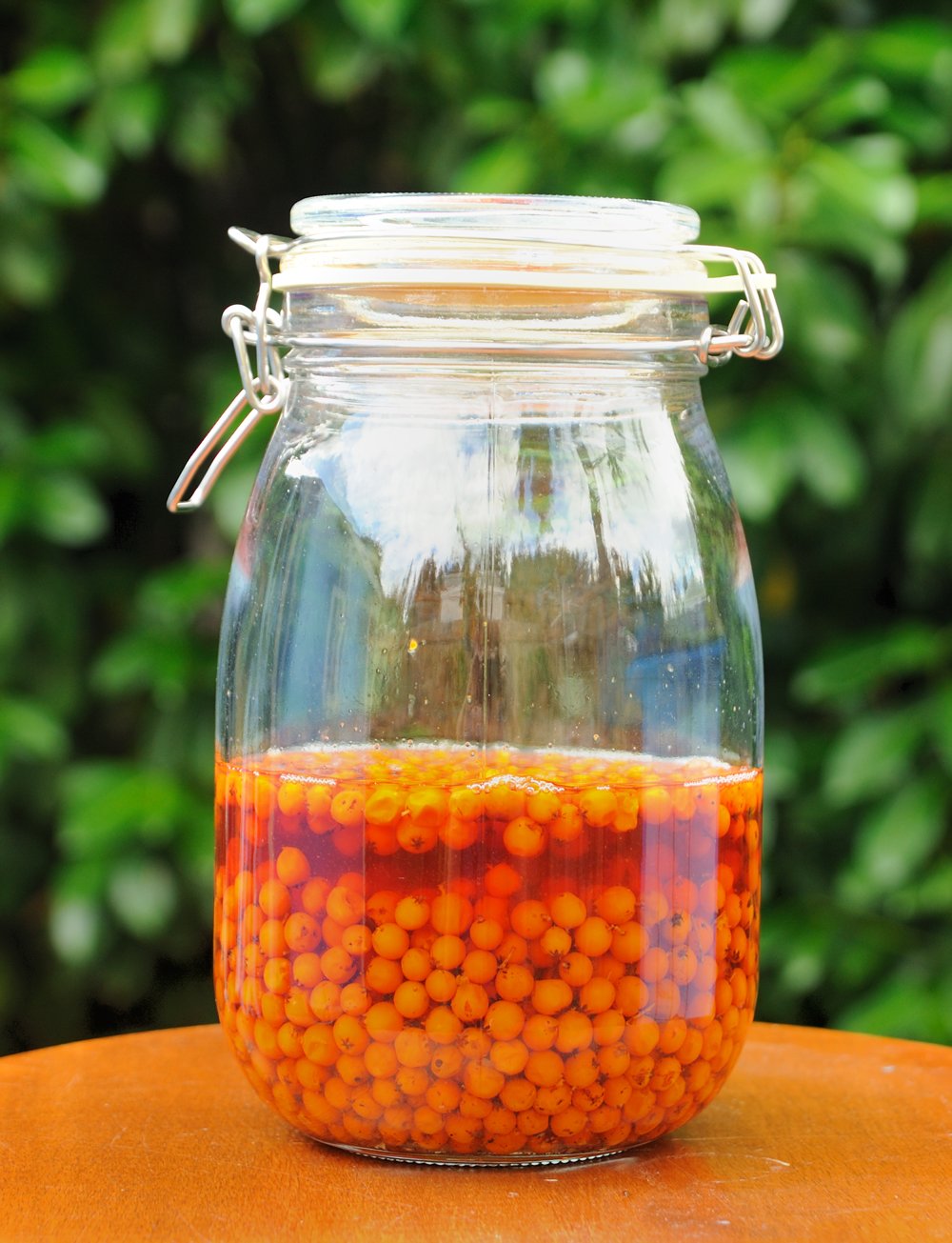
Take the berries out of the oven, let them cool, and transfer them to a glass container. Pour in the vodka. The berries should be completely submerged in the vodka. If they aren’t, add more vodka. Seal the container tightly.
Infuse in a dark place at room temperature for one month. Shake it every five days or so.
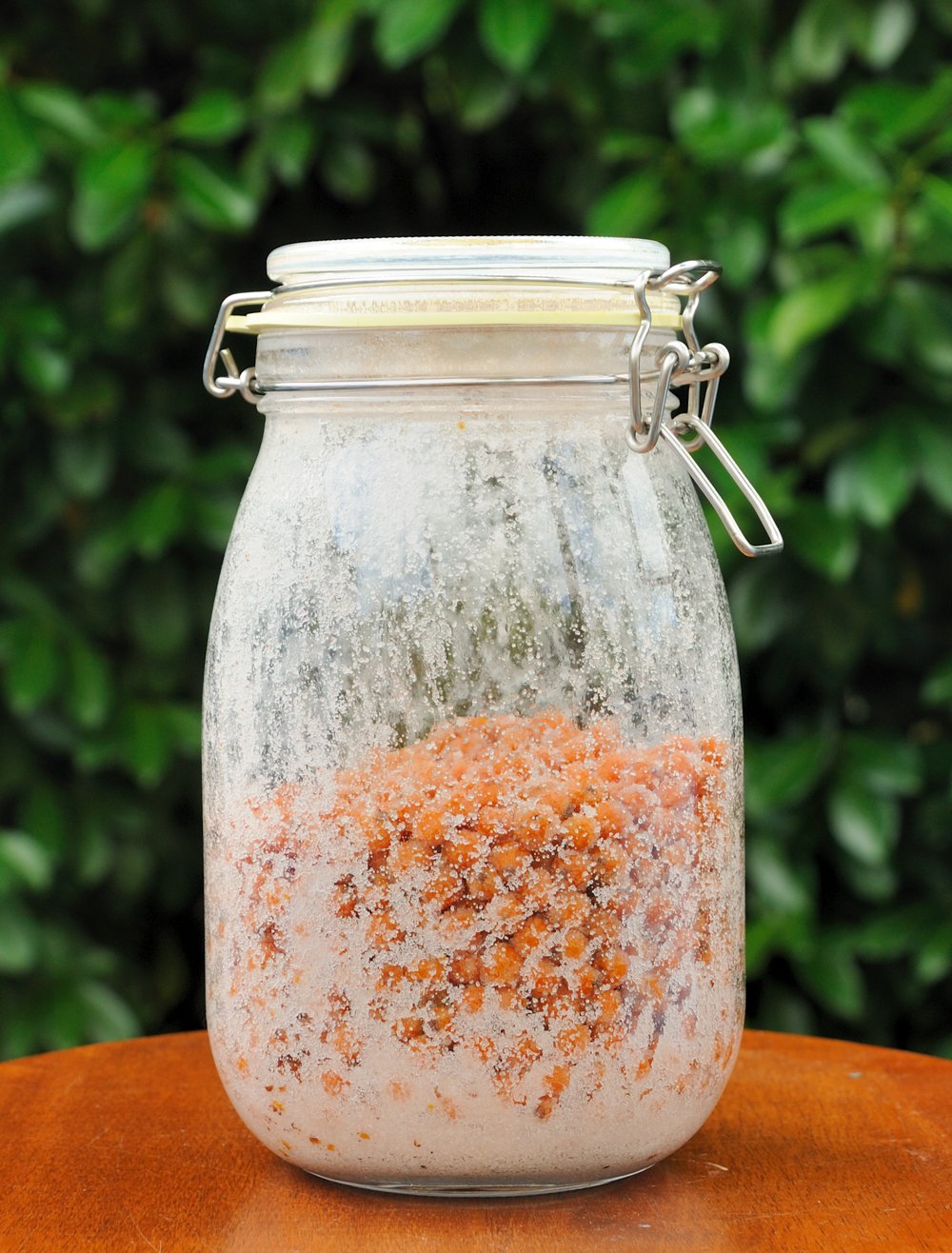
Strain the infusion through a sieve or cheesecloth, without squeezing the berries. Put the strained liquid in the refrigerator, and return the berries to their original container. Cover them with the sugar and shake well so that the sugar is distributed evenly. Leave them in a sunny place for one week, shaking once a day. The sugar will partially draw the alcohol out of the berries and turn into a thick syrup.
Strain the syrup, gently squeezing the berries. Combine the two liquids.
The next step is optional. You can add up to 250 ml of water to the berries, stir, and leave them in a dark place at room temperature for three days. For the first two days, shake them 2–3 times a day. On the last day, leave them alone. Then strain the liquid and combine it with the rest of the liqueur.
If you don’t add water, the liqueur will be stronger and more viscous. The more water you add, the less viscous it will be. Without water, the final strength is about 25% ABV. With 250 ml of water, it’s about 18% ABV. I liked the result with 150 ml of water.
Filter the liqueur through cotton or a coffee filter. Pour it into bottles or other containers for long-term storage and seal tightly. Leave it in a cool place for at least five days to stabilize.
It’s best to drink the liqueur slightly chilled.
A touch of bitterness, moderate sweetness, and a wonderfully bright aroma.
By the way, in Celtic culture, rowan is considered an excellent protection against evil spirits and witches’ spells. So I suppose the liqueur should work too, if anyone needs it.
And I also came up with two cocktails using this liqueur. But those will be stories for another time.
