


Video about cider on my YouTube channel.
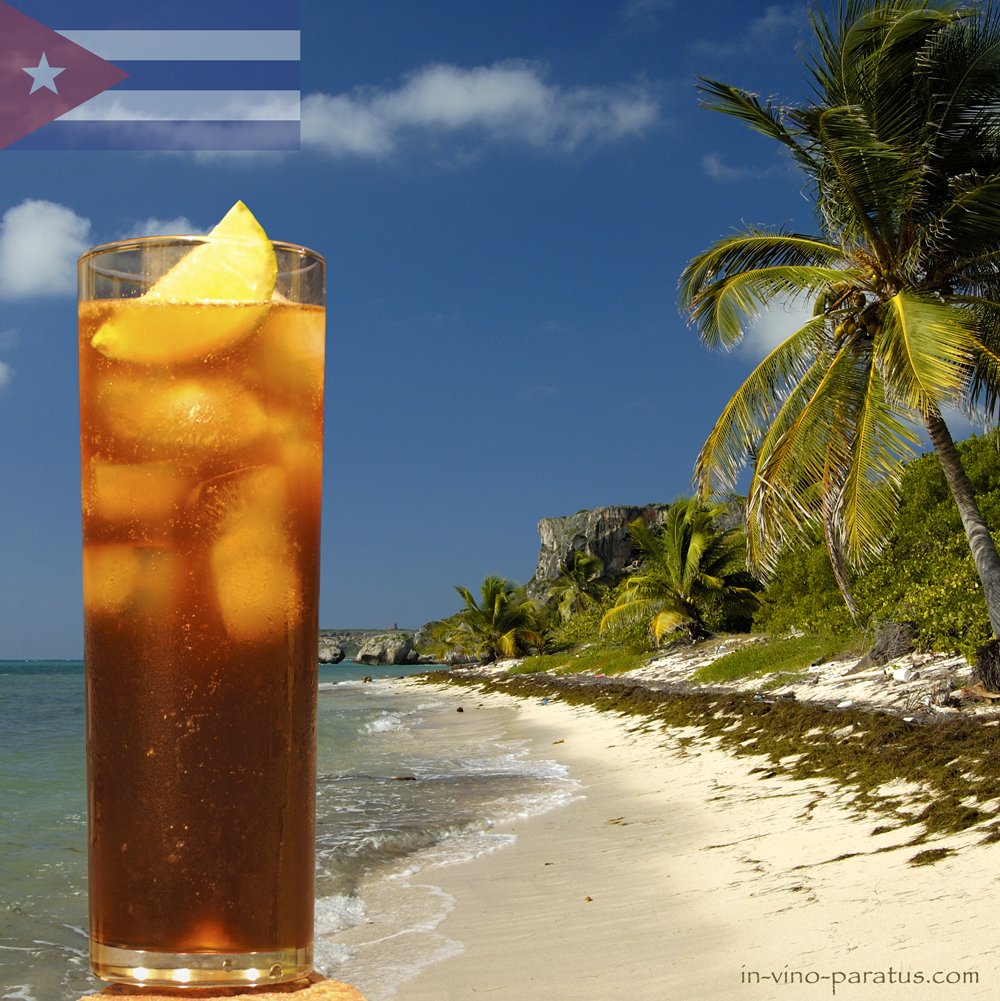
Cuba Libre is one of the most popular cocktails in the world. According to Bacardi, in 2025 it ranked sixth globally in terms of orders, with around six million servings consumed every day worldwide. Which is hardly surprising, considering how simple and affordable it is to make: rum, Coca-Cola, and lime.
Strictly speaking, there are two nearly identical cocktails: Cuba Libre and Rum and Coke. Many people consider them two names for the same drink, but purists regard Cuba Libre as a specific variation of Rum and Coke. A Rum and Coke requires only the two ingredients named in the title — rum and cola. The rum can be of any style, while lime is entirely optional. For a Cuba Libre, however, lime is essential, and the rum should be white. Bacardi goes even further, insisting that the only proper choice is Bacardi rum — though that is a matter best left to their marketing department.
The Cuba Libre was created in 1900. In fact, last year marked the cocktail’s 125th anniversary. Coincidentally, 1900 was also the year the United States began exporting bottled Coca-Cola internationally, including to Cuba.
Just two years earlier, in 1898, the Spanish-American War had begun and ended — the final chapter of Cuba’s struggle for independence from Spain. After the Spanish sank the American battleship Maine in Havana Harbor, the United States decided to intervene in the conflict and secure Cuba’s much-discussed freedom and independence — which it did successfully.
Among those arriving in Cuba alongside the American troops was Reverend Warren Candler, a missionary and bishop of the Methodist Episcopal Church. Officially, he was there on church business. But as a devoted family man, he also found time to look after the interests of his older brother, Asa Griggs Candler, who held the exclusive rights to sell Coca-Cola. Warren arranged for Coca-Cola to be supplied both to American troops stationed in Cuba and to bars throughout Havana.
By 1900, Havana was full of American soldiers. Naturally, Havana’s bars were full of them as well. According to the most widely accepted legend, an American Army captain was sitting in a Havana bar when he spotted a bottle of Coca-Cola. Struck by a wave of homesickness, he asked the bartender to mix it with Cuban rum — and yes, most likely it was Bacardi. In Cuba, rum and Bacardi are practically inseparable. He then requested a squeeze of lime. Raising his glass, he proposed a toast: “¡Por Cuba Libre!” — “To a Free Cuba!” The phrase had been the rallying cry of Cuban rebels during the War of Independence. The soldiers and revolutionaries gathered in the bar immediately echoed the toast. They also show interest in the unusual contents of the captain’s glass. They ordered the same drink, approved it enthusiastically, and the cocktail began its journey around the world.
In 1965, Fausto Rodriguez, a Bacardí advertising executive, signed a sworn statement claiming that he had personally witnessed the birth of the cocktail. According to Rodriguez, he was fourteen years old at the time and worked as a messenger for the very American officer for whom the drink was first mixed. Bacardí published his testimony in Life magazine in 1966. However, since Rodriguez was employed by Bacardí, many historians remain skeptical of the story.
Another version suggests that the drink was first created in 1902 at Havana’s famous El Floridita during celebrations marking the anniversary of Cuban independence.
Whatever its true origins, the Cuba Libre—an embodiment of the alliance between Cuba and the United States, both politically and in a glass—quickly conquered Havana’s bars. From there, it rapidly spread across the United States.
Historian Charles A. Coulombe viewed the Cuba Libre as a historical milestone in liquid form, describing it as: “A potent symbol of a changing world order—the marriage of rum, lubricant of the old colonial empires, and Coca-Cola, icon of modern American global capitalism.”
In the United States, where Americans were addicted to Coca-Cola already, the Cuba Libre quickly rose to the top tier of popular cocktails. The era of Prohibition in the United States only accelerated its success. Coca-Cola rapidly became the preferred mixer for disguising the harsh flavors of illicit, low-quality spirits. Coca-Cola’s powerful taste is difficult to overpower. Journalist and satirist H. L. Mencken even jokingly proposed a cocktail called Jump Stiddy—a blend of Coca-Cola and denatured alcohol drained from a car radiator. It was, of course, intended as satire, though every joke contains a grain of truth.
Prohibition eventually ended, but the Cuba Libre remained firmly established as one of America’s favorite cocktails.
The drink also spread rapidly beyond its two founding nations alongside the global expansion of Coca-Cola. Its popularity received another major boost during World War II, when American servicemen carried their favorite beverages around the world and eagerly introduced them to local populations.
Music has played its part also. In 1943, Trinidadian singer Lord Invader wrote the song Rum and Coca-Cola, about an American soldier in Trinidad drinking rum and cola while flirting with a local girl. Producer Morey Amsterdam shamelessly appropriated the song and sold the rights to the famous Andrews Sisters, who released it in 1944 as their own. The Andrews Sisters were international stars, and their recording greatly boosted the cocktail’s popularity worldwide. Lord Invader later sued and won compensation for the blatant theft of his artwork.
Then came the Cuban Revolution in 1959, and the friendship between Cuba and the United States collapsed under the weight of the embargo. Cuba lost access to Coca-Cola, while the United States lost access to Cuban rum. By then, however, the Cuba Libre had taken on a life of its own.
Over the years—especially in its broader incarnation as the Rum and Coke—the cocktail has developed countless variations. Bartenders began experimenting with different styles of rum, while Pepsi, Dr Pepper, and other colas often took the place of Coca-Cola. Lime juice became optional, and additional ingredients such as bitters occasionally found their way into the glass.
The classic Cuba Libre, however, remains simple: light rum, Coca-Cola, and fresh lime juice.
Let’s make Cuba Libre.
Ingredients:
1⅔ oz / 50 ml light rum
⅓ oz / 10 ml freshly squeezed lime juice
4 oz / 120 ml Coca-Cola
These are the official IBA proportions, although you can, of course, adjust them to suit your taste.
Process:
Combine all ingredients in a highball glass filled with ice cubes.
Garnish: a lime wedge.
